No-Prep Veneers: A Case Study from Smiles by Pai
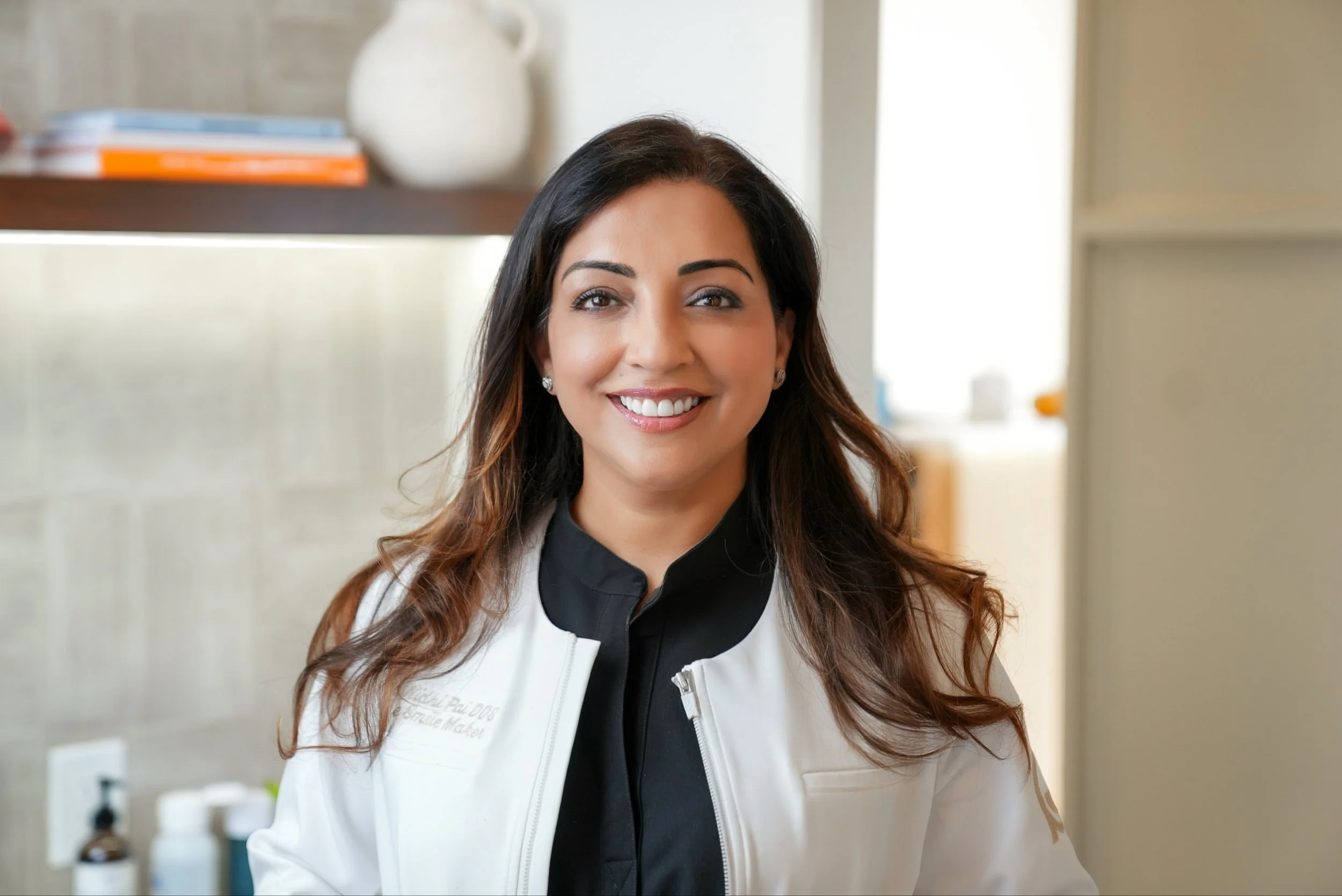
This case involved a patient with significant enamel loss. Her teeth had become increasingly sensitive and were approaching the point where root canals would have been the next conversation. Dr. Nidhi Pai took a different route: no-prep veneers. No drilling, no anesthesia, and no removal of remaining healthy tooth structure.
What are no-prep veneers?
Traditional veneers require the dentist to remove a thin layer of enamel from the front of the tooth before bonding the veneer in place. This makes room for the veneer and prevents the tooth from looking bulky, but it is an irreversible step. Once enamel is removed, it does not come back.
No-prep veneers skip that step entirely. The tooth surface is lightly polished rather than cut, and an ultra-thin veneer is bonded directly to it. No shots, no drilling, no recovery. This approach only works when the patient's bite and tooth position allow for it, but when it does, it is the more conservative option by a significant margin.
For this patient, whose enamel was already compromised, removing more was not a consideration. No-prep veneers addressed the sensitivity, protected what was left, and improved the appearance of her smile at the same time.
How the case was approached
Dr. Pai began with a full consultation that included digital photographs, facial analysis, and a bite assessment. The goal at this stage is to determine the right proportions for the veneers relative to the patient's face, not just the teeth in isolation.
Before placing anything permanent, a set of temporary acrylic veneers was made so the patient could preview the result and request adjustments. This is a standard part of Dr. Pai's process for veneer cases. The final porcelain veneers were placed only after the patient confirmed she was satisfied with the preview.
Placement took one appointment. No anesthesia was needed.
The result
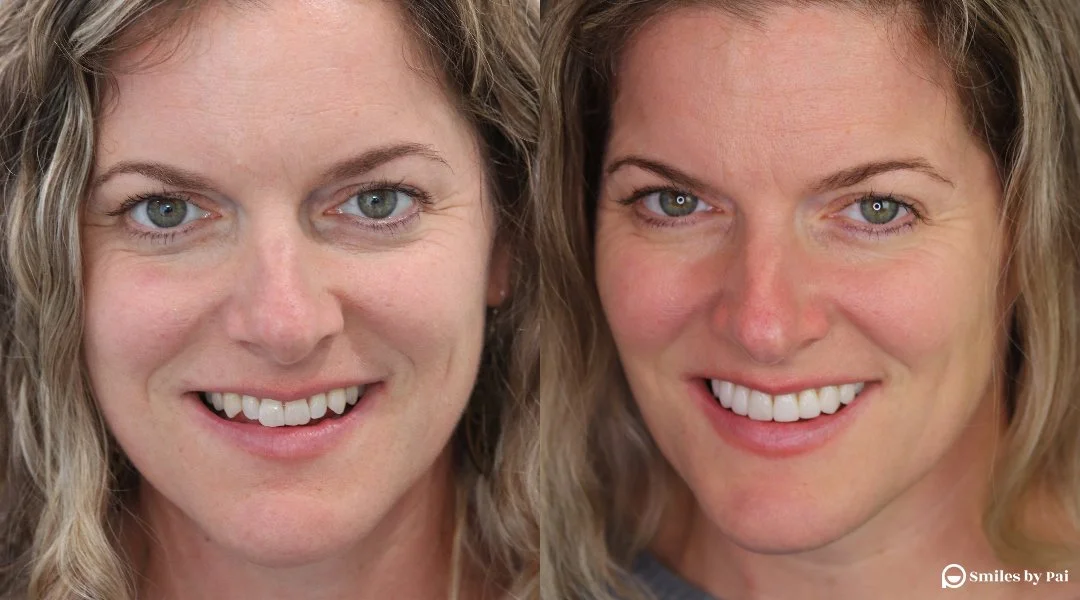
The patient's teeth are no longer sensitive. The veneers protect the remaining enamel and have removed the immediate risk of further damage. The appearance is natural and proportionate to her face. In her words: "No grinding. No pain. Just beautiful teeth that feel like mine."
Who is a good candidate for no-prep veneers?
No-prep veneers are not the right solution for every case. They work best when the teeth are already close to the desired position and size, and when there is enough existing tooth surface for a strong bond. Patients with significant crowding, large gaps, or teeth that are severely misaligned will typically need orthodontic treatment first or may need traditional veneers instead.
For patients who have worn down their enamel through grinding, acid erosion, or aggressive brushing, no-prep veneers are worth discussing. The veneer protects what remains and often eliminates sensitivity in the process.
Considering no-prep veneers in the Bay Area?
Dr. Pai sees patients from across the San Francisco Bay Area at her practice. If you are looking into veneers, Invisalign, or a full smile makeover, a consultation is the right place to start. She will evaluate your teeth and tell you whether no-prep is an option or whether a different approach makes more sense for your case.