How Does Invisalign Work? Answers from a Top 1% Bay Area Invisalign Provider
Dr. Nidhi Pai has been placing Invisalign cases for over 15 years and is consistently ranked in the top 1% of providers in the country. Patients come to her Palo Alto office from across the Bay Area, including San Francisco, San Jose, and the Peninsula. These are the questions she hears most often.
How does Invisalign work?
The process starts with digital impressions or physical models of the patient's teeth. Those go to Invisalign's lab, which returns a digital treatment plan for Dr. Pai to review. She doesn't approve it as-is. She looks at how each tooth is tracking, how the bite is coming together, and whether the proposed movements make sense for that patient's anatomy. She and the patient go through the plan together before anything is ordered.
From there, the patient receives a series of clear aligner trays. Each tray has a specific prescription built into it. The trays are worn for about a week at a time, shifting teeth incrementally toward the final position. Progress is visible week by week. The goal is a healthy bite and straight teeth, not just aesthetics.
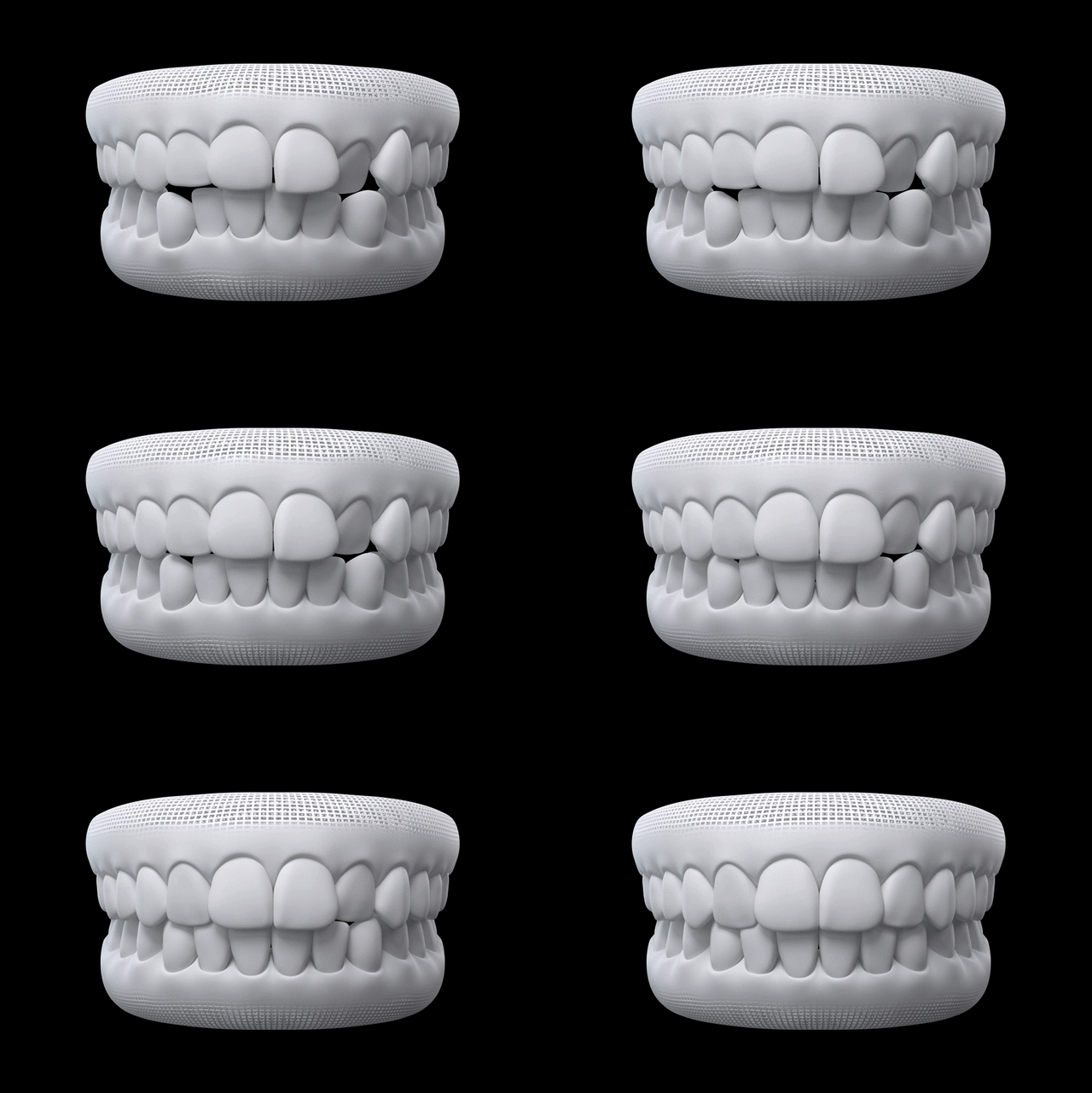
What is the difference between braces and Invisalign?
With braces, you align teeth with the help of the wire and you put the brackets in every single tooth and the wire moves the teeth back and forth or up or down. The main difference between braces and Invisalign is that the wire can just do one movement at one time. So if we have to pull the tooth out, you can only do that movement with the help of one wire. The wire is changed every 2-4 weeks depending on the dentist’s preference. With Invisalign, they are clear aligners. You have buttons on the teeth but they are also used with clear composite so it’s not that visible. You are able to take the trays out when you’re eating food and then put it back so that gives you a lot of flexibility to enjoy your meals. Also because it’s digitally designed, you can have multiple movements in one tray. You can have a rotation with one tooth, an extrusion with one tooth, and intrusion in another tooth. That makes the treatment go by super fast and shortens the time significantly with the Invisalign trays and it’s more comfortable.
How much does Invisalign cost?
Across the Bay Area, Invisalign typically runs between $6,000 and $9,000 depending on the complexity of the case and the practice. At Dr. Pai's office, treatment starts at $6,500+. That includes the full course of treatment, not just the first set of trays.
The range exists because not every case is the same. A mild crowding correction takes fewer aligners than a full bite correction. Financing options are available for patients who need them, including CareCredit and in-office payment plans.
What is the difference between braces and Invisalign?
With traditional braces, brackets are bonded to every tooth and connected by a wire. The wire is what moves the teeth, and it can only perform one type of movement at a time. Tipping a tooth requires one wire configuration; rotating it requires another. The wire gets swapped every two to four weeks as the teeth respond.Invisalign is digitally designed, which changes what is possible. Each aligner can incorporate multiple simultaneous movements: a rotation on one tooth, an extrusion on another, an intrusion on a third, all in the same tray. A wire cannot do that. In practice, this often shortens overall treatment time significantly compared to braces.Invisalign does use small attachments bonded to certain teeth, but they are made from clear composite and are not obvious. Patients remove the trays to eat, which eliminates food restrictions and makes daily cleaning easier. For most of Dr. Pai's adult patients in the Bay Area, that flexibility makes a real difference.
Can you be too old for Invisalign?
No. Dr. Pai's oldest current Invisalign patient is 77. He came in because crowding in his front teeth was making home cleaning difficult and accelerating gum damage. Several months into treatment, his hygiene appointments have improved. His hygienist is seeing less inflammation, less bleeding, and less buildup.Damage that has already occurred from a bad bite or longstanding crowding cannot be reversed. But further damage can be prevented. At any age, a better-aligned bite is a healthier bite. Dr. Pai regularly encourages patients in their 60s, 70s, and beyond to have the conversation. The biology of tooth movement does not have an expiration date.
Ready to find out if Invisalign is right for you?
Dr. Pai's practice serves patients throughout the San Francisco Bay Area, including Palo Alto, Menlo Park, Mountain View, Redwood City, San Jose, and San Francisco. Request a consultation to discuss your specific situation.