Full Mouth Reconstruction: A Case Study from Dr. Nidhi Pai's Bay Area Practice
This case study walks through a full mouth reconstruction that Dr. Nidhi Pai completed at her Bay Area practice. It is a good example of what this type of treatment looks like in practice, who it is for, and why the planning phase is the most important part of the process.
Why this patient needed full mouth reconstruction
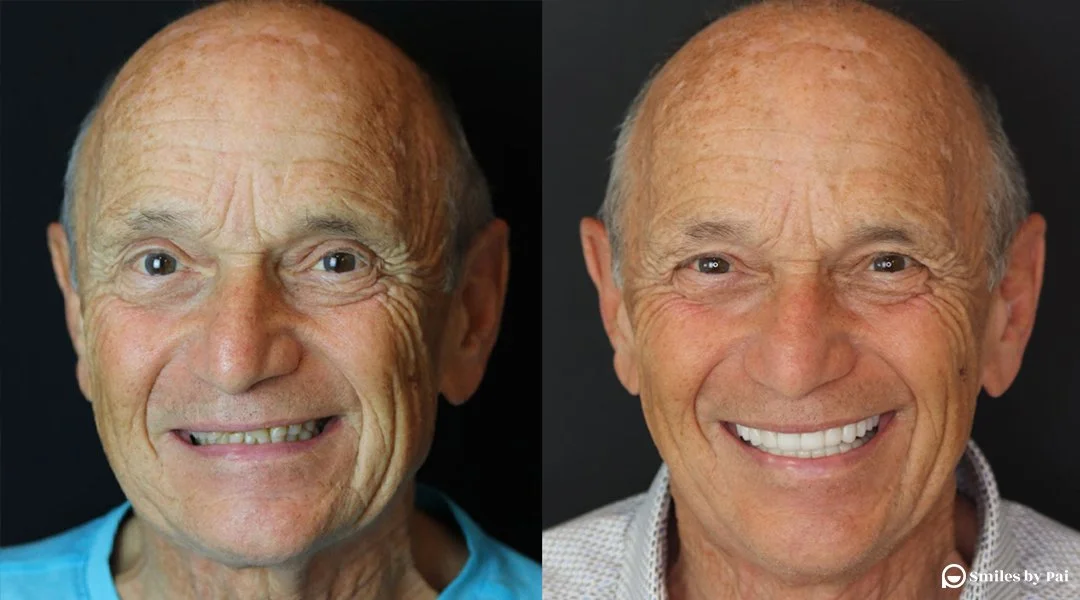
This patient had been grinding and clenching his teeth for years. By the time he came in, the wear was significant. His dentition had lost considerable vertical height, and the strain on his TMJ and jaw muscles had accumulated to the point where his bite no longer had proper structural support. This is not an unusual presentation. Many patients do not realize how much damage chronic clenching causes until it has progressed to this level.
How the case was planned
The first step in any full mouth reconstruction is planning. Dr. Pai took photographs, evaluated facial proportions, and determined what tooth dimensions would fit correctly within this patient's mouth. From there, she created a wax mockup so the proportions could be visualized in three dimensions before any irreversible work was done.
This planning phase is not optional. With full mouth cases, skipping it leads to surprises at the end, and surprises in dentistry are rarely good ones.
The two-month temporary phase
Before placing the final restorations, the patient wore temporary veneers for two months. This is standard practice in Dr. Pai's approach to complex cases. The temporaries allow the jaw muscles and bite to adapt to the new vertical height gradually. If the change is introduced too quickly or without a testing period, patients can develop pain or muscle tension that is difficult to resolve after the fact.
Two months is not arbitrary. It is enough time for the muscles to recalibrate and for the patient to confirm they are comfortable with how the new bite feels and functions before anything permanent is cemented.
Where the case stands
Dr. Pai has completed the full upper veneers for this patient. Work on the lower arch is ongoing. The total treatment runs roughly three to six months from start to finish. The patient reported no discomfort during the process, and the final upper results were exactly what the planning had projected.
Who is a good candidate for full mouth reconstruction?
Patients who have significant tooth wear from grinding, clenching, or acid erosion are the most common candidates. If the wear has progressed to the point where the bite is compromised or the jaw muscles are strained, a full mouth approach addresses the underlying structural problem rather than patching individual teeth one at a time.
Dr. Pai works with patients from across the San Francisco Bay Area who are dealing with these issues. The cases take time, but the process is straightforward when planned correctly.
Interested in a consultation?
Dr. Pai offers virtual smile consultations for patients who want an initial assessment before coming in. Take a few photographs of your teeth and text them to us. She will review them and provide feedback on whether full mouth reconstruction or a less involved treatment is the right starting point.